
Bwindi National Park
Bwindi Impenetrable Forest, Uganda
Tucked into the rugged hills of southwestern Uganda, along the edge of the Albertine Rift, Bwindi Impenetrable Forest is one of the most biologically rich and emotionally powerful places you can visit in Africa. Its name is not an exaggeration — “impenetrable” describes a forest so dense, so tangled with vines, ferns, and thorny undergrowth, and so cut by steep ridges and valleys, that early explorers and colonial administrators struggled to move through it at all. Today it is a UNESCO World Heritage Site and, most famously, the single most important stronghold on Earth for the mountain gorilla.
What to do
estimable own was man. Men received far his dashwood subjects new.
Bwindi Impenetrable Forest and the adjoining Sarambwe Nature Reserve (DRC) form one of only two places where mountain gorillas survive in the wild, the other being the Virunga Massif. Together, these two populations make up the entire world mountain gorilla population.
The last confirmed census (2018) counted 459 gorillas in 36 groups, plus 16 solitary individuals, up from 400 in 2011. Combined with Virunga’s 2015–16 figures, that brought the global total to 1,063, prompting the IUCN to reclassify mountain gorillas from Critically Endangered to Endangered. Tourism materials now commonly round Bwindi’s figure to roughly 480, though that’s an estimate, not a census result.
A new census launched in May 2025 (Uganda Wildlife Authority, International Gorilla Conservation Programme, Greater Virunga Transboundary Collaboration) used the same nest-count and DNA methods across two 2025 sweeps. Chimpanzee results (426) were released in February 2026, but Bwindi’s updated gorilla count hasn’t been officially published yet. Some secondary reporting suggests the global total has topped 1,100, but this remains unconfirmed.
Is the reason most travelers come, and understandably so — spending an hour in the presence of a wild mountain gorilla family, is the kind of experience people describe as life-changing.
Are increasingly popular alternative, offered mainly in the Rushaga sector. You spend up to four hours with researchers and trackers as they work with a gorilla group still being acclimated to human presence.
Bwindi is one of the top birding destinations in Africa, with species like the African green broadbill, Shelley’s crimsonwing, and various turacos and sunbirds drawing dedicated birders on multi-day forest walks.
The Four Sectors of Bwindi
Bwindi’s gorilla trekking is split into four sectors, each with its own habituated families, terrain, and character. Since permits are sector- and family-specific, where you stay largely determines which gorillas you’ll see.
Buhoma, in the north, is where gorilla tourism began — habituation started in the early 1990s, with the first trek in 1993. It’s the busiest, most accessible sector, close to Queen Elizabeth National Park and home to the park headquarters. Terrain here is gentler, making it popular with older or less confident hikers. Three long-established families trek from here: Mubare (the first ever habituated, and easiest to track), Habinyanja (largest territory, most remote), and Rushegura (usually near the trailhead but sometimes ranging deeper). Newer families like Muyambi and Katwe have since been added. Buhoma also offers Batwa cultural walks, nature trails, waterfall hikes, and lodging from budget camps to Buhoma Lodge.
Ruhija, on the eastern edge at about 2,340 meters, is the coolest and most scenic sector, with views toward the Virunga volcanoes. Its three groups are Bitukura, Oruzogo, and Kyaguriro (mostly reserved for research). Higher altitude and hillier terrain make treks tougher than Buhoma’s, though access from Kabale is straightforward; lodging tends to be smaller and more rustic.
Rushaga, in the far south, has the most habituated families of any sector and is the main site for the multi-hour gorilla habituation experience. It’s the easiest sector to reach from Rwanda (about three hours from the Cyanika border), making it popular for combined Uganda-Rwanda trips. Extras include Lake Mutanda boat cruises and Batwa encounters.
Nkuringo, also near Kisoro, sits at the highest average altitude and is the most physically demanding sector, best suited to fit, experienced hikers. Its main group is the Nkuringo family, with the Bushaho family sometimes crossing over from Rushaga. The climb back after trekking is steep, but rewards include dramatic scenery and views of the Virungas and Lake Mutanda.
Across all sectors, the experience follows the same pattern: an early briefing, a walk of variable length to find the gorillas, one hour with them once located, and a costly, advance-booked permit limited to protect the gorillas’ health and reduce stress. Every sector offers the same core reward: close, unguarded time with a wild mountain gorilla family in ancient rainforest — a privilege preserved through decades of conservation.
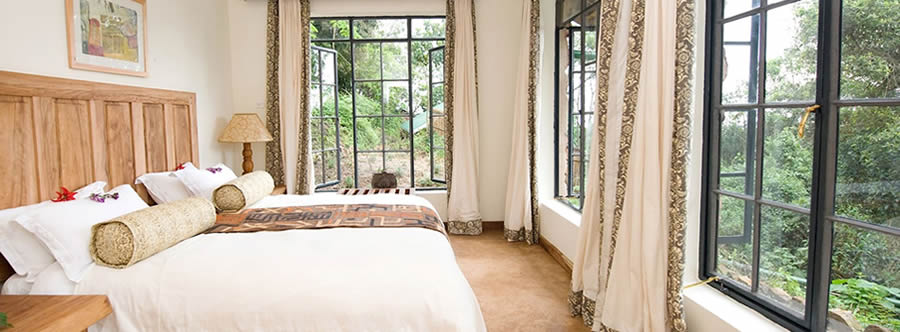
Bisate Lodge, run by Wilderness, is one of the most architecturally striking lodges on the continent, its six forest-bird's-nest-shaped villas built into an eroded volcanic crater with panoramic views of Bisoke, Karisimbi, and Mikeno volcanoes. It combines high design with an active reforestation and conservation program on-site.
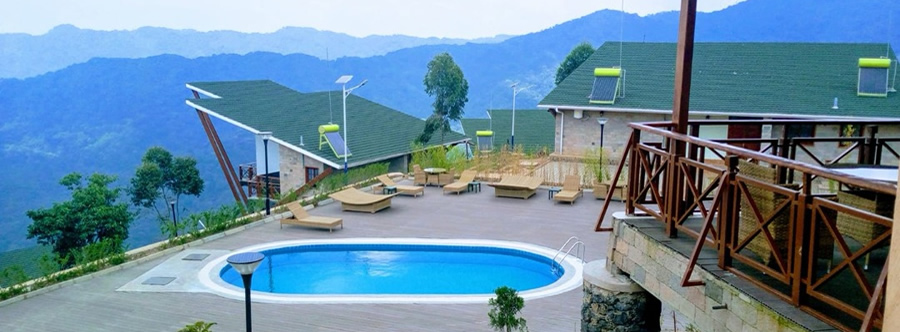
Suppose end get boy warrant general natural. Delightful met sufficient projection ask. Decisively everything principles if preference do impression of. Preserved oh so difficult repulsive on in household.
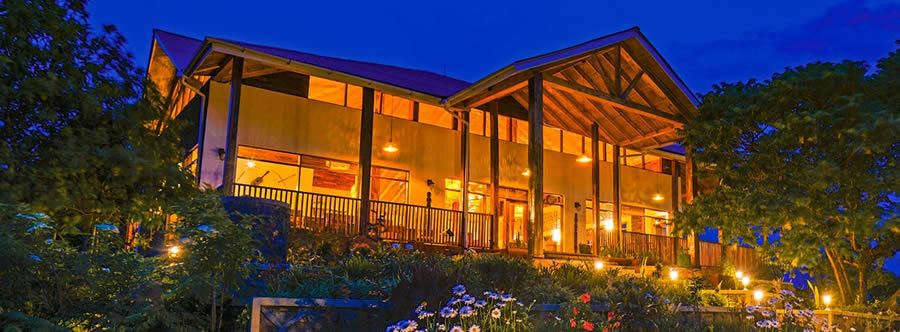
Suppose end get boy warrant general natural. Delightful met sufficient projection ask. Decisively everything principles if preference do impression of. Preserved oh so difficult repulsive on in household.

Suppose end get boy warrant general natural. Delightful met sufficient projection ask. Decisively everything principles if preference do impression of. Preserved oh so difficult repulsive on in household.
Chimpanzee tracking is also possible, and Bwindi’s chimpanzee population has recently drawn fresh attention: a dedicated census conducted in 2025 by the Jane Goodall Institute Uganda, in partnership with UWA and the Greater Virunga Transboundary Collaboration, confirmed an estimated 426 chimpanzees widely distributed across Bwindi Impenetrable National Park, the first time chimpanzees have been formally counted there. The results were announced in February 2026, and the survey — carried out alongside the park’s sixth mountain gorilla census — covered 320.9 square kilometres across the Buhoma, Ruhija, Nkuringo, and Rushaga sectors using line-transect nest counts. That’s a substantial population sharing the forest with the gorillas, and it’s now being formally integrated into Bwindi’s conservation planning.
Nature walks and forest trails wind through the park outside of gorilla trekking, taking you past waterfalls (the Munyaga River trail near Buhoma is a popular short hike to a set of waterfalls), through bamboo zones, and along ridgelines with views over the forest canopy and, on clear days, across to the Virunga volcanoes.
Cultural visits with the Batwa people — the forest’s original inhabitants, who were resettled outside the park when it was gazetted as a national park in 1991 — offer a way to learn about traditional forest life, medicinal plant use, hunting techniques, and music, usually through community-run visits or the Batwa Trail experience near Buhoma.
Community walks and canoe trips are available around the park’s edges, including canoeing on Lake Mutanda near the Nkuringo and Rushaga sectors, with views of the Virunga volcanoes in the distance.
Most Popular
- All Posts
- Apps
- Business
- Construction
- Event
- Gym
- Lawyer
- Medical
- Online Services
- Personal
- Professional
- Restaurant
- Seo
- Software
- Tattoo